How long do kittens need their mother?
16 weeks!
Most cats are taken away from their mother far too early. Pedigree cats are lucky; as a rule they may stay in the nest for thirteen weeks. Yet even that is not long enough. Kittens need their mother (and littermates) for sixteen weeks. Here are the three most important reasons.
1First complete the ‘training’ as a pet
Kittens have two phases in which they can be prepared for life as a social pet. This is only possible during these phases; afterwards barely or not at all.
The first socialisation phase runs from week two through week seven, extending to nine. During it, kittens should have neutral or positive experiences with all the beings, things and events they will need to ‘deal’ with later in life as a pet. Such as people, other cats, household sounds and visits to the vet.
The second socialisation phase runs from week eight through sixteen. During it, kittens learn ‘feline social skills’, such as where the line lies between playful biting and real biting. Kittens that are alone during this phase can barely cope with other cats later, if at all. And yet a cat is a social animal.
In both phases, kittens learn primarily from their mother. Research has shown that they adopt her behaviour sooner than that of other cats.
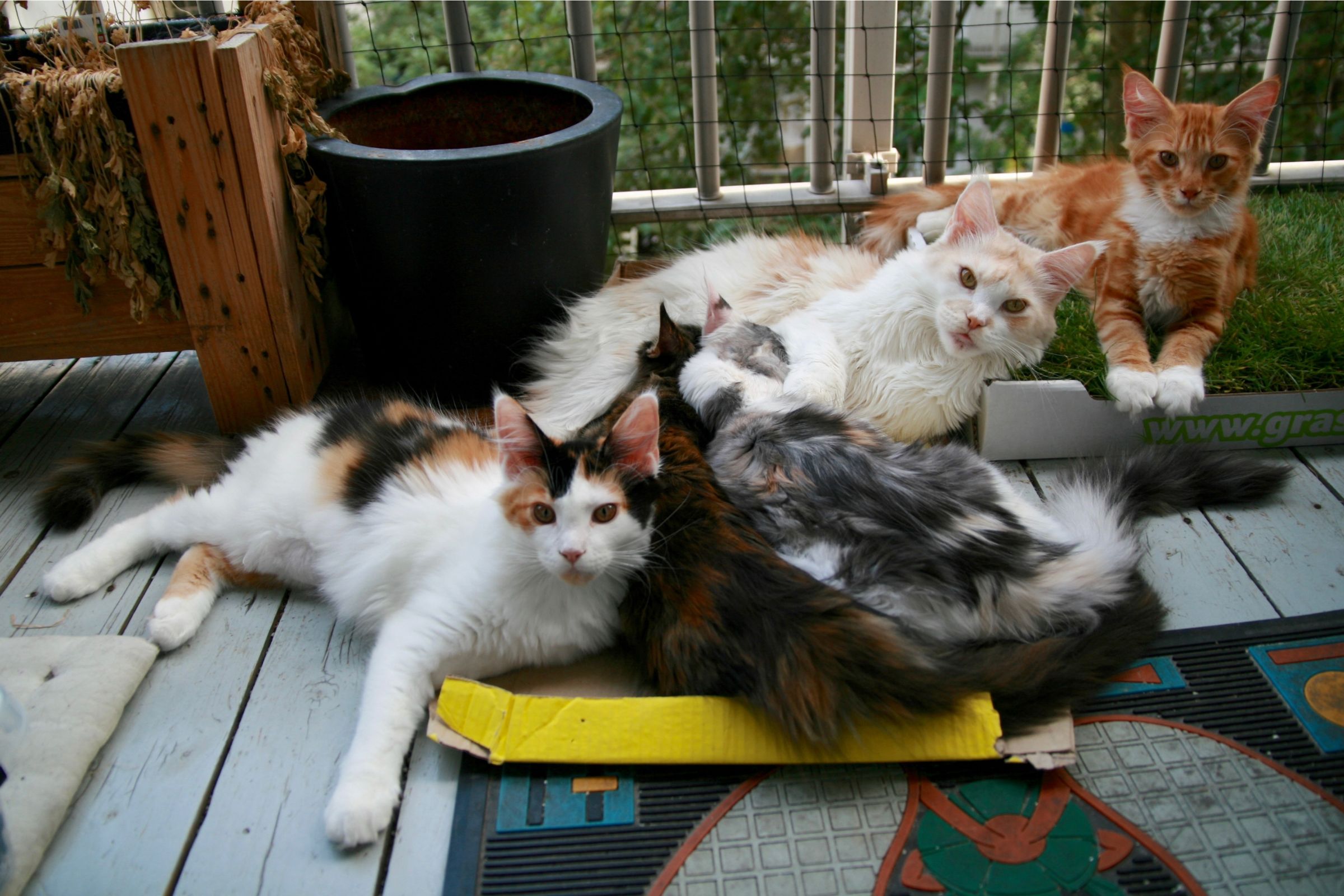
2Complete the natural weaning process
Weaning is a gradual process in which a kitten becomes less and less dependent on its mother. It is not only about switching from mother’s milk to solid food, as is often thought.
The weaning process starts in week three to four and lasts about six months on average. During this process a kitten is allowed to drink and suckle from its mother less and less. In doing so it also learns to cope with frustration, an important life lesson. Kittens that don’t learn this, or insufficiently, are more likely to become aggressive later.
By around three months the milk becomes less nutritious, and it’s even doubtful whether there is any milk flow left. To kittens that makes no difference. Suckling at the teat is a self-rewarding act: milk or no milk, they enjoy the suckling and it calms them.
Quite a few scientific books on cat behaviour state that the weaning process is complete by around week seven to nine. Unfortunately, these refer to studies of laboratory queens with kittens that often have to live under cat-degrading and stressful conditions. It is highly questionable whether these animals display natural behaviour. Studies of feral and stray cats are therefore more reliable sources for the duration of the weaning process. In them it lasts four to eight months. Regularly even up to a year and a half. Or until the mother has her next litter.
3Being able to survive independently
Under natural conditions, female kittens often stay with their mother and other female relatives for life. Male kittens go their own way when they are between 6 and 36 months old.
If there are insufficient resources to stay alive, such as food, drink and shelter, the paths of mothers and kittens may part sooner to raise everyone’s chances of survival. But this can only happen once the kittens are at least sixteen weeks old. Before that they are unable to survive on their own. It takes four months, for example, before their eyesight is fully developed.